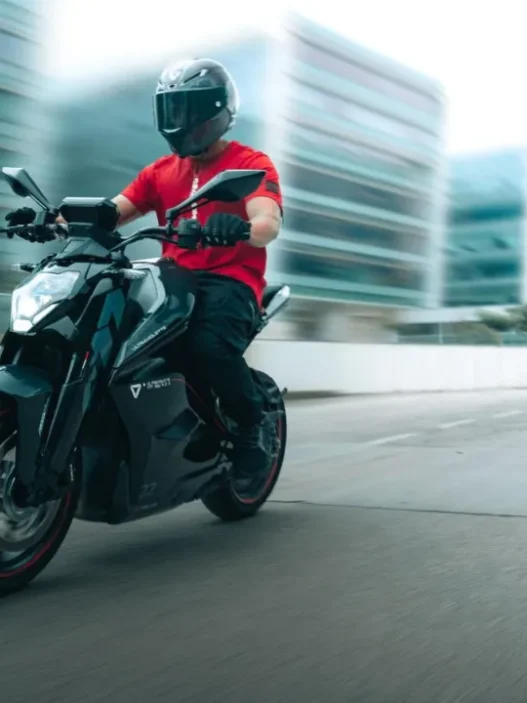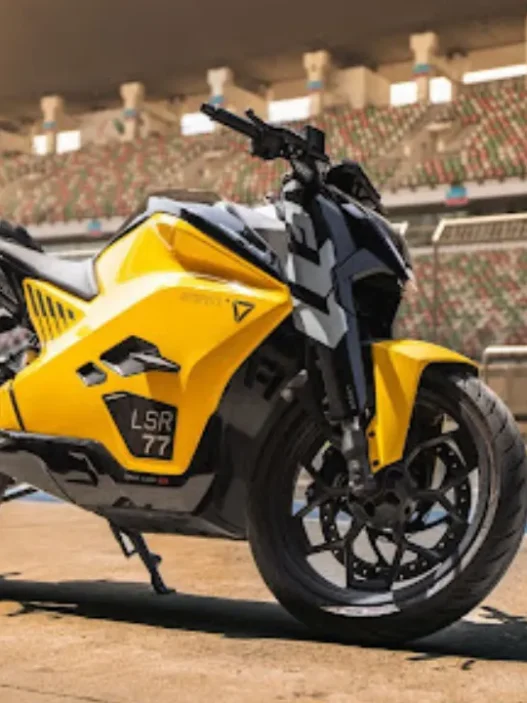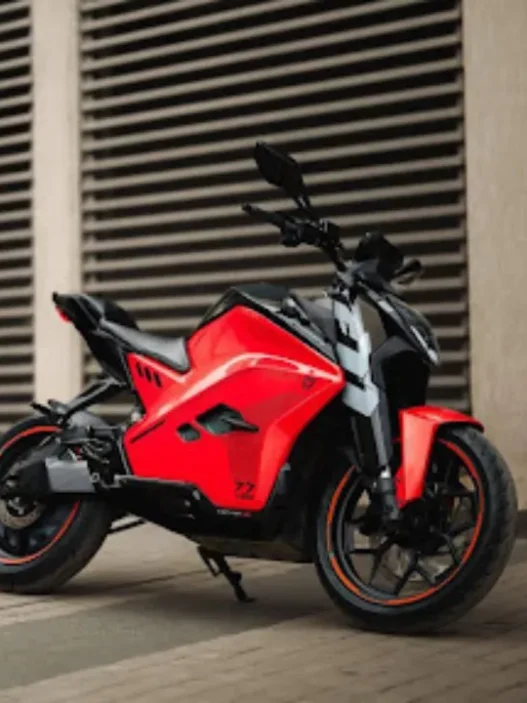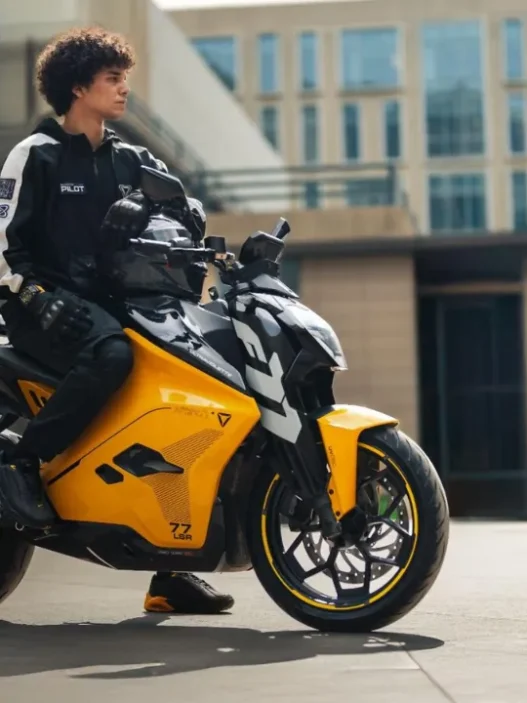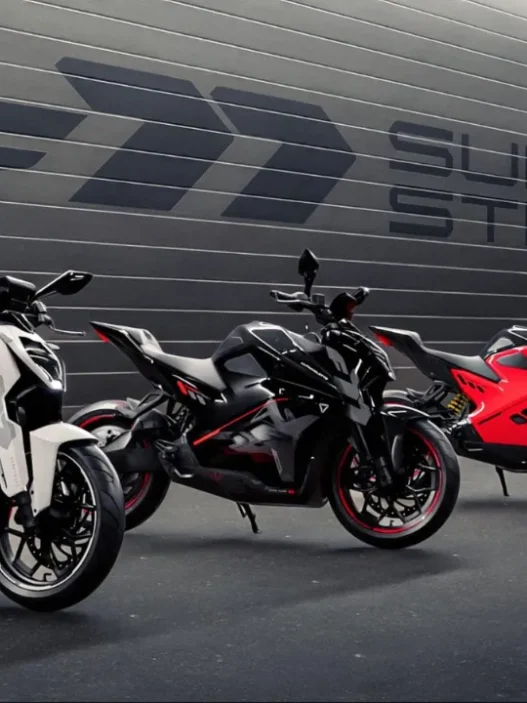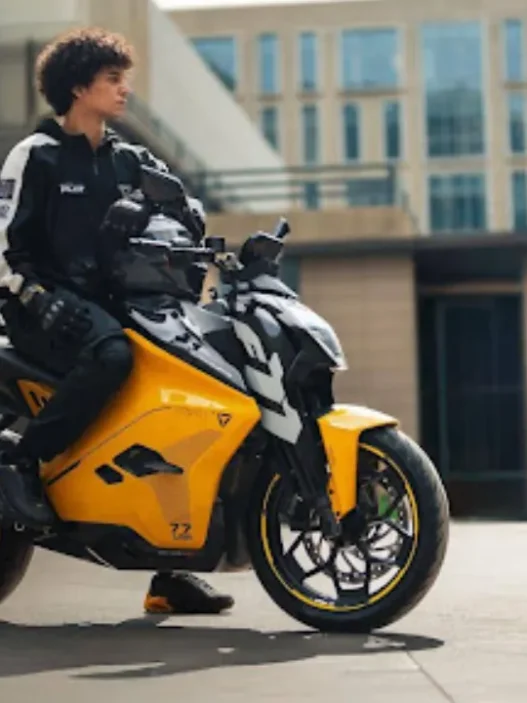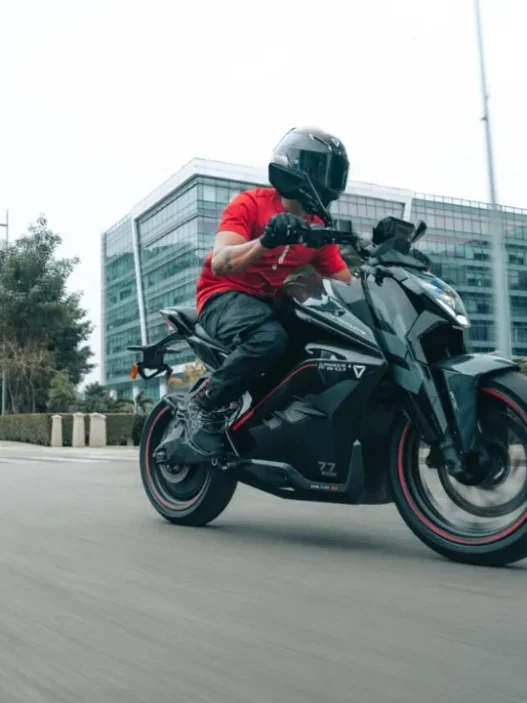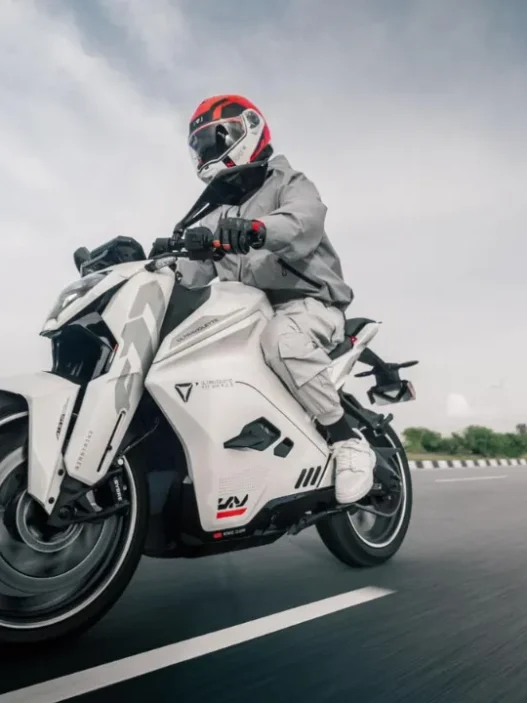




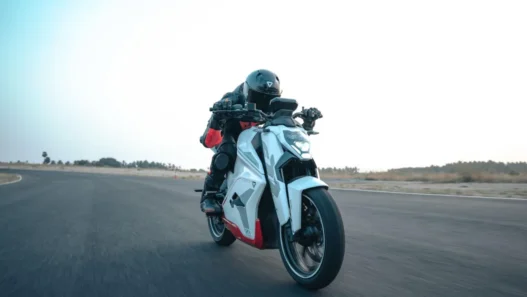

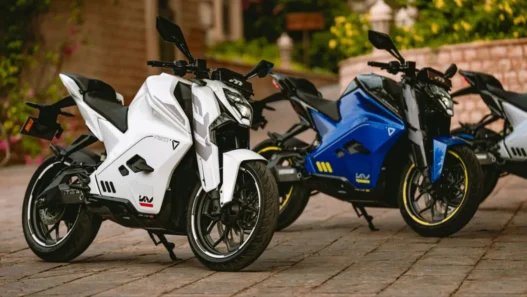

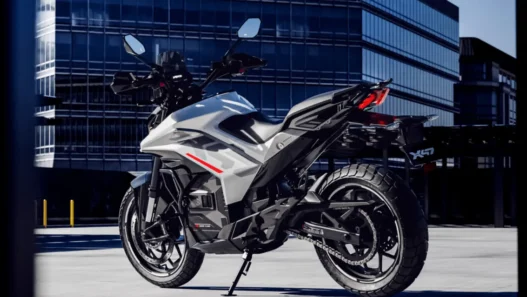

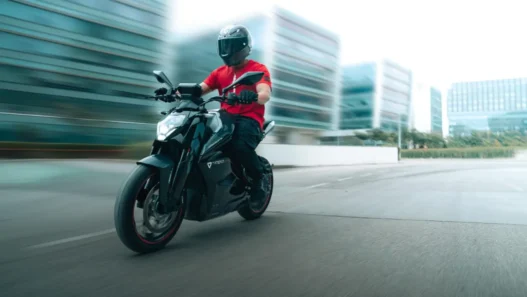
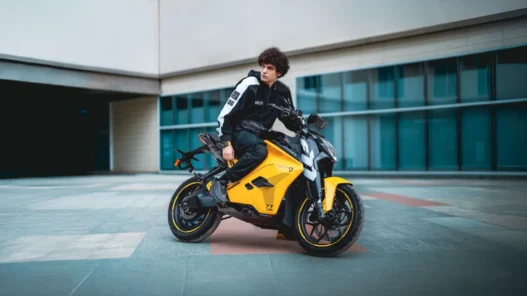
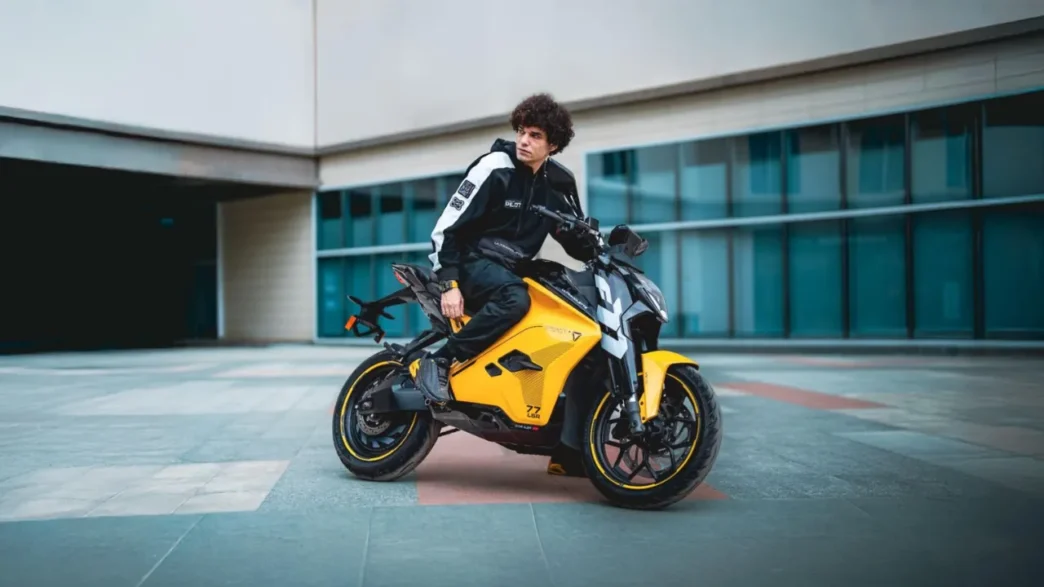
So, you’ve been checking out the Ultraviolette Superstreet F77. Maybe even stalking it online a little. Let’s be honest, it looks like something straight out of a sci-fi movie, right?
But you’re also practical. You’re asking the right question:
“Bro, how do I actually charge this thing?”
Fair. A bike this good-looking shouldn’t give you homework. And the good news? It doesn’t.
Let’s break it all down. Just real answers for riders who want the thrill of electric without the headache of “kitna charging bacha hai?”
What Makes the Ultraviolette Superstreet F77’s Charging Different?
Before we talk plugs and sockets, you need to understand what you’re dealing with.
This is not just any EV. It’s built for India. It’s built for riders who zip through traffic on weekdays and ride out to the hills on Sundays. The F77 is what you get when serious tech meets serious style.
The bike comes in two avatars:
- F77 Recon with a 7.1 kWh battery
- F77 with a bigger 10.3 kWh battery
Both variants give you different performance and charging times. But here’s the punchline: charging them is easier than your Bluetooth earbuds that mysteriously die at the worst moments.
Chapter 1: Charging at Home—The Everyday Hero Setup
You don’t need a fancy setup. No solar panel. No electrician from Mars.
You just need:
- A normal 15-amp socket (the same kind you use for your washing machine or geyser)
- The standard charger that comes with the bike
That’s it.
Here’s how long it takes to charge from 20% to 80%:
Variant Charging Time Approx Range Added F77 Recon
3 Hours~200 km F77 (10.3kWh)
5 Hours~300 km
Range varies depending on how you ride. If you’re in Ballistic mode, ripping through highways, expect a little less. If you’re chilling in Glide mode inside city traffic, you’ll get more.
The best part? You just plug it in after dinner. Go to sleep. Wake up. Full tank. No petrol pump stress. No queue. No waiting.
Chapter 2: Charging at Work or the Gym—The Backup Plan
Let’s say your ride to the office is around 15-20 km. You get there, park it in the basement, and think, “What if I could top it up while I’m working?”
You totally can. If your office or co-working space has a 15A socket (most decent ones do), carry the standard charger and plug it in.
Lunch break = full battery.
Even your local gym could become your new charging station. Just talk to the manager, offer to bring samosas once a week, and plug your beast in.
Chapter 3: The BOOST Charger-For the Impatient Rider
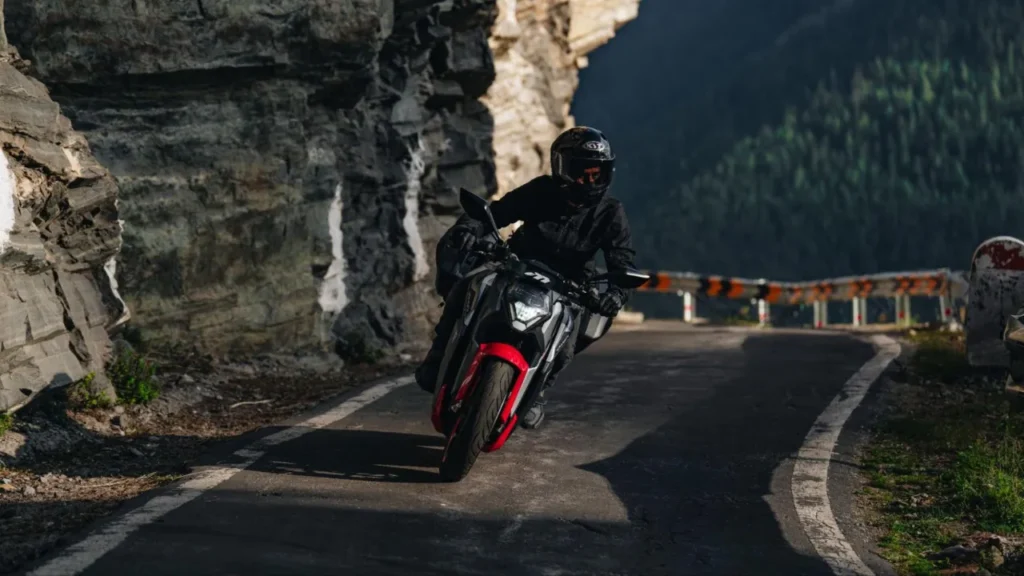
If you’re someone who can’t wait, good news. There’s a BOOST charger.
This is an optional upgrade. You pay extra, but you get serious speed.
BOOST Charger Stats:
- Charging Speed: Up to 75 km of range per hour
- 20% to 80% Charge: Just 2.5 hours on the bigger F77
You can keep this at home or in your workplace for quicker top-ups. It’s like getting express delivery on your battery every time.
Chapter 4: Fast Charging on the Go – UV Supersonic Stuff
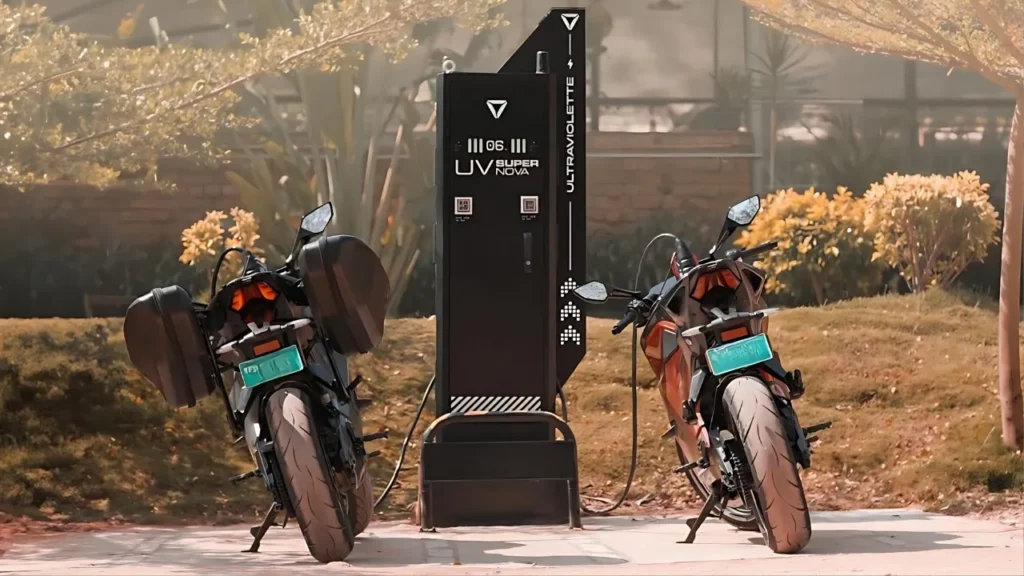
Ultraviolette has built something called the UV Supernova DC Fast Charging Network. It’s a growing network of fast chargers that you’ll start seeing at key points across cities and highways.
Think of it like an electric dhaba stop.
You stop, plug in, grab a coffee, scroll Insta, and in 45 to 60 minutes, you’re back to full power.
This is great for:
- The highway runs to your hometown
- Weekend rides to Lonavala or Nandi Hills
- Spontaneous late-night ice cream trips
Just use the UV app to locate the nearest fast charger, and you’re sorted.
Chapter 5: Charging While Travelling – Yes, It’s Doable
Okay, but what if you’re doing a road trip? From Pune to Goa? Or Bengaluru to Chikkamagalur?
Here’s how to plan it:
Map your range:
Ultraviolette SuperStreet F77 Recon gives around 323 km range in IDC test cycles. In real life, expect around 200–250 km per full charge, depending on how wild you ride.
Find your stops:
Use Google Maps and the UV App to check where 15A sockets or charging stations are available. Hotels, cafes, EV charging spots, they’re more common than you think now.
Carry your charger:
Always keep your charger in your backpack or tail bag. It doesn’t weigh much and makes you charging-ready wherever you land.
Ask. Nicely.
Most places will let you charge if you explain politely. Offer to buy coffee or pay for the electricity. Everyone likes a well-mannered biker.
Chapter 6: Battery Safety – India -Ready Engineering
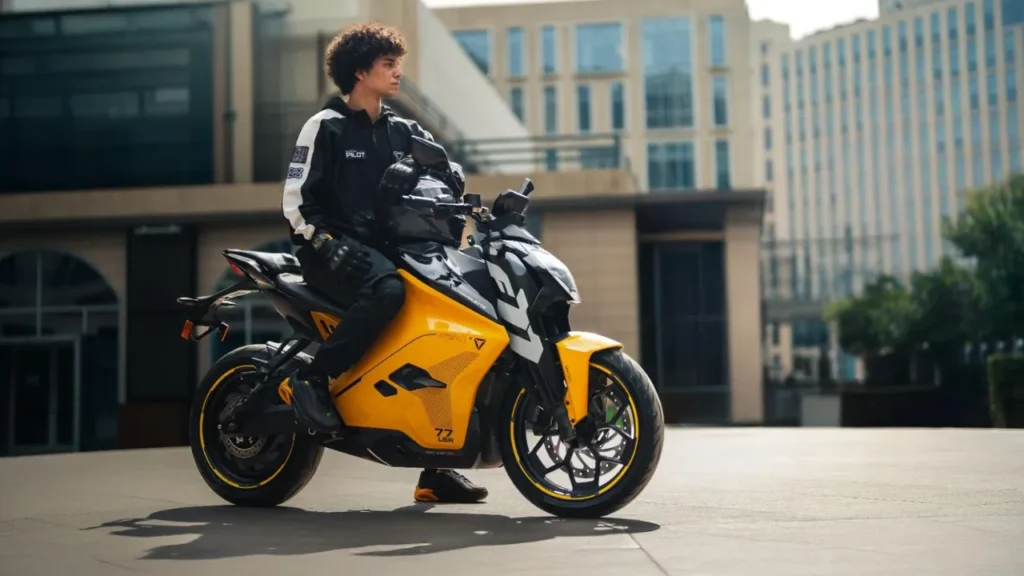
Let’s talk about desi conditions.
Heavy rain in Kerala. Dust storms in Rajasthan. Crazy heat in Delhi summers. The Superstreet F77 battery is built for all of it.
Here’s what’s inside:
- 5-Level Battery Protection System: Covers mechanical, thermal, electrical, electronic and software safety
- All-aluminium casing: Keeps the battery safe from water, heat, and dust
- IP67 rating: Basically means water splash is not a problem. You won’t fry your bike even if you get stuck in a waterlogged lane.
Also, there’s a deep sleep mode. If you’re going out of town or not using the bike for a while, the battery conserves itself like a pro. Saves power. Stays healthy. Long life.
Chapter 7: The App Life – Charge Tracking on Your Phone
You know what’s cooler than checking your battery level?
Check your battery level on your phone.
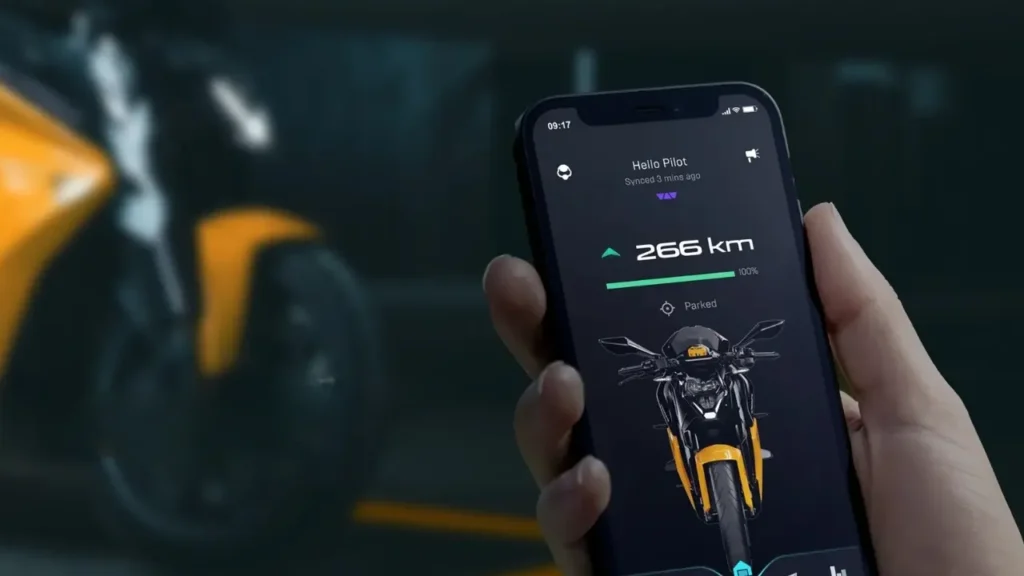
The Ultraviolette app does exactly that. It shows you:
- How much charge is left
- Estimated range based on your riding mode
- Charging time left
- Nearby charging points
- Remote locking/unlocking
It also shows your daily ride analytics, so you can literally see how your riding style affects battery life. Geeky? Maybe. Useful? Hell yes.
Chapter 8: Daily Life with Charging – How It Feels
Let’s get real.
You’re not going to be running calculations every day. In actual daily life, here’s how charging fits in:
- Home charging at night: 90% of the time
- Office/gym charging: 5% of the time
- Fast charging at cafés/highways: 5% of the time (for long trips)
Once you fall into the habit, it’s honestly easier than dealing with petrol pumps. No spills. No smells. No rude attendants. Just plug in and relax.
It changes how you plan your day. You start thinking in terms of “when can I top up quietly?” instead of “where’s the next pump?”
Chapter 9: Cost of Charging – The Wallet Wins Too
We know what you’re thinking. “Yaar, kitna paisa lagega?”
Let’s break it down.
Let’s say electricity in your area costs ₹8 per unit.
- F77 Recon (7.1 kWh): ₹56 to go from 0 to 100%
- F77 (10.3 kWh): ₹82 for a full charge
Now divide that by the range you get:
- Cost per km: ₹0.25 to ₹0.40
That’s cheaper than a cup of chai. Seriously.
Compare that to petrol, where you’re paying ₹110–120 per litre, and getting ₹2.5 to ₹3 per km in city rides.
You save thousands every month. That’s movie nights, beers, weekend brunch, or that smartwatch you’ve been eyeing.
Chapter 10: Charging Etiquette – The Bro Code of EV Riders
If you’re using public or shared chargers, follow the bro code:
- Don’t hog the charger. If your bike is 100% charged, unplug it.
- Don’t cut someone’s line. Wait for your turn.
- Say thanks. If someone lets you plug in, thank them properly. Maybe offer a coffee.
- Don’t leave wires hanging. Keep things neat for the next rider.
Electric biking is a growing community. Let’s keep it cool.
Final Thoughts: Charging Is Not a Problem. It’s a Power Move.
The F77 makes you rethink your relationship with fuel. It’s not about finding a petrol bunk anymore. It’s about plugging in where you chill, work, or sleep.
Charging becomes a lifestyle thing.
A quiet ritual.
Like putting your smartwatch on its dock before bed.
And slowly, it makes you feel in control. Of your ride. Your routine. Your money. Even your weekends.
So, Should You Try the Superstreet F77?
If you’ve made it this far, you’re clearly curious. Maybe even a little hooked.
Here’s our advice:
Don’t overthink. Go take a test ride.
Feel the pull of that throttle.
Check the fit.
See how your charging routine could work.
Ask questions. Explore.
Ultraviolette isn’t selling just a bike. They’re selling a completely different riding life. One where you ride smarter, cleaner, and cooler.
So go on. Book a test ride.
Even if you don’t buy it today, you’ll walk away knowing what the future of riding feels like.
And who knows, you might not want to go back to petrol ever again.